Showing posts with label News. Show all posts

Thursday, 17 March 2016

Yellen defends Fed's independence following Brainard donation to Clinton

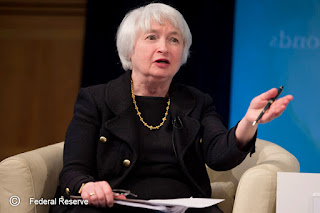
Federal Reserve chair Janet Yellen vigorously defended the U.S. central bank's ability to accomplish its dual-mandate without being influenced by political pressures, in the wake of reports that a Fed governor made a series of campaign contributions to a leading U.S. presidential candidate.

Yellen fielded questions on the Fed's independence within the federal government on Wednesday, days after a report surfaced last week that Fed governor Lael Brainard donated $750 to the campaign of Democratic frontrunner Hillary Clinton. Brainard, who served as Deputy National Economic Advisor under former President Bill Clinton in the mid-1990s, made the donations in three contributions from November through January, according to Federal Election Commission (FEC) records.

"We are a nonpartisan independent institution devoted to pursuing our congressionally mandated objectives, and I have never seen political views in any way influence the policy judgments that are made inside the Federal Reserve," Ms. Yellen said. "I want to say that emphatically."

Governors from the Federal Reserve are subject to the Hatch Act, a federal law passed in 1939, which prohibits high-level officials from engaging in partisan political activity. The law, which was named for Sen. Carl Hatch (D, New Mexico), was most recently amended in 2012.

"I would say, within that, it’s up to each individual to decide what is appropriate in their point of view," Yellen added. "The Federal Reserve is not a partisan political organization."
Brainard has close family ties with both Bill and Hillary Clinton. For a five-year period beginning in 2009, Brainard's husband, Kurt Campbell, worked in the State Department as the Assistant Secretary of State for East Asian and Pacific Affairs, while advancing a comprehensive U.S. strategy that took him to every corner of the Asia-Pacific region. In 2013, Hillary Clinton awarded him with the Secretary of State's Distinguished Service Award – the nation's highest diplomatic award.

News source: investing.com
Saturday, 12 March 2016

China January-February activity data weak, policy easing expected

China's activity data remained weak in the first two months of 2016, with factory output growth hitting the weakest since the global financial crisis, keeping pressure on policymakers to do more to avert a sharper showdown in the world's second-largest economy.


Factory output grew 5.4 percent in January and February from a year earlier, data released by the National Bureau of Statistics (NBS) showed, slowing from a 5.9 percent rise in December to the weakest since November 2008.

Economists polled by Reuters had expected factory output to grow 5.6 percent in the first two months from a year earlier.

Retail sales, a gauge of domestic consumption, rose 10.2 percent in the first two months - the weakest since May 2015, versus expectations of a 10.8 percent rise.

However, fixed-asset investment, a crucial driver China's economy, rose 10.2 percent in the first two months from a year earlier, beating expectations of 9.5 percent.

The government reports combined January and February growth figures for the factory output, investment and retail sales, to smooth out seasonal distortions caused by the long Lunar New Year holiday, when most companies shut down.

The government has set a growth target of 6.5 percent to 7 percent for this year. A spate of soft data points to further weakness at the start of the year as Beijing struggles to cushion the slowdown.

Top leaders have already pledged "supply-side structural reforms" to tackle excess factory capacity and are also expected to step up policy support to help avert an economic hard landing.

China's economy expanded an annual 6.9 percent in 2015, its slowest pace in 25 years.

News source: BEIJING (Reuters)

Friday, 11 March 2016

Dollar turns broadly lower after Draghi remarks

The dollar turned broadly lower against the other major currencies on Thursday, erasing a more than 1% rally after European Central Bank President Mario Draghi said interest rates aren’t likely to be cut again.

EUR/USD rallied 1.43% to 1.1155.

The euro initially weakened after the ECB cut interest rates across the euro zone to new record lows and boosted its quantitative easing program.
The ECB wrong footed markets by cutting its benchmark interest rate to a record-low of zero from 0.05%. Market watchers had been expecting no change.

The central bank also cut the deposit facility rate deeper into negative territory, to minus 0.4% and cut the marginal lending rate cut to 0.25% from 0.30%.
In addition, the ECB boosted its quantitative easing program by €20 billion per month to €80 billion, starting in April.

The bank also said investment grade euro-denominated bonds would become eligible for purchases under its asset purchase program.
But the euro rebounded after Draghi said the ECB did not anticipate that it will be necessary to reduce interest rates further, but added that this could change.


In the U.S., the Department of Labor said the number of individuals filing for initial jobless benefits in the week ending March 5 decreased by 18,000 to 259,000 from the previous week’s total of 277,000.
Analysts expected jobless claims to fall by 2,000 to 275,000 last week.


USD/JPY eased up 0.09% to 114.43.
The dollar turned lower against the pound and the Swiss franc, with GBP/USD up 0.51% at 1.4288 and with USD/CHF tumbling 1.13% to 0.9860.
Earlier Thursday, British Prime Minister David Cameron warned that a U.K. exit from the European Union would put pressure on sterling.

Meanwhile, the Australian dollar was lower, with AUD/USD down 0.44% at 0.7452, while NZD/USD added 0.17% to 0.6665.
Earlier Thursday, the Reserve Bank of New Zealand unexpectedly lowered its benchmark interest rate to 2.25% from 2.50% and signaled the possibility for further rate cuts to come.

USD/CAD rose 0.25% to 1.3285.
The U.S. dollar index, which measures the greenback’s strength against a trade-weighted basket of six major currencies, was down 0.84% at 96.38, the lowest since February 15, after hitting one-and-a-half week highs of 98.42 earlier in the session.

News source: investing.com

Monday, 7 March 2016

The week ahead-Forex

In the week ahead, investors will be focusing on Thursday’s European Central Bank meeting after the bank disappointed expectations with a smaller-than-expected stimulus move at its December meeting.
Central bank meetings in Canada and New Zealand will also be closely watched.

Investors will also be zoning in on inflation and trade data from China amid concerns that the world’s number-to economy is heading for a hard landing.

On Monday, Germany is to release data on factory orders. The Swiss National Bank is to publish data on its foreign currency reserves and the Eurogroup of euro zone finance ministers are to hold talks in Brussels.

Later, Federal Reserve Governors Lael Brainard and Stanley Fischer are both due to speak at an event in Washington.

Last week, the dollar weakened against the other major currencies on Friday as a mixed U.S. jobs report for February dampened expectations that the Federal Reserve would raise interest rates again in the near term.

The Labor Department reported that the U.S. economy added 242,000 new jobs last month, easily outstripping forecasts for wage growth of 190,000.

The unemployment rate held steady at an eight-year low of 4.9%, in line with forecasts.
But average hourly earnings fell by 0.1% during February, reversing the 0.5% rise seen in January. The drop in average earnings lowered the year-on-year gain in earnings to 2.2% from 2.5% in January.

The weak wage numbers indicated that consumer inflation is likely to remain muted. Fed policymakers are watching inflation closely as they try to determine when to raise rates again.
Higher interest rates would boost the dollar by making it more attractive to yield-seeking investors.

Friday, 26 February 2016

Forex- Daily market updates Friday 26-02-2016


The dollar slipped lower against the euro and the yen on Friday, as investors continued to focus on the oil market and awaited the release of a string of U.S. economic reports due later in the day.
Separately, data on Friday showed that Tokyo’s consumer price index rose at an annual rate of 0.1% in February, compared to expectations for a 0.3% fall and after a 0.3% slip the previous month.
Tokyo’s core CPI, which excludes fresh food, ticked down 0.1% this month, confounding expectations for a 0.2% fall and after a 0.1% decline in January.

The pound edged higher against the U.S. dollar on Friday, as sentiment on the greenback weakened ahead of a string of key U.S. economic reports and as concerns over a potential British exit from the European Union slightly eased.

In the euro zone, preliminary data showed that Germany’s CPI ticked up 0.4% in February, disappointing expectations for a 0.5% rise, after a 0.8% fall the previous month. Year-on-year, consumer prices were flat, compared to expectations for a 0.1% gain.

The dollar strengthened after preliminary data showed that U.S. gross domestic product grew 1.0% in the fourth quarter, compared to a previously reported 0.7% growth rate and expectations for a 0.4% rate.

A separate report showed that the U.S. goods trade deficit widened to $62.23 billion in January from $61.50 billion the previous month. Analysts had expected the goods trade deficit to narrow to $61.10 billion last month.

Data also showed that personal spending rose 0.5% in January, beating expectations for a 0.3% gain, after an increase of 0.1% in December.

In addition, the University of Michigan said its index of consumer sentiment rose to 91.7 in February from 90.7 the previous month, compared to expectations for an increase to 91.0.

Wednesday, 24 February 2016

EURUSD still on bullish stance.


US Dollar lower against the EUR after disappointed data on Wednesday. EURUSD extended its recovery the low from 1.0958, currently trading in 1.1024, after making the day high of 1.1046.

The U.S. Commerce Department said its New Home sales dropped by 9.2% to 494,000 units last month, compared to expectations for a decline of 4.4% to 520,000. US Markit services PMI fell to 49.8 in February, below the 53.5 expected. Meanwhile Crude oil inventories increased to 3.502M with the expectation of 3.427M, underlined weakened US data.

Intraday support at 1.1000 where the 0.5 Fib retracement level on Hourly chart.  In a Daily chart, during a downtrend, there is a sell off  after  the candle starts. However, the candle closes at or near its high. This signifies a weakening of the previous bearish sentiment.

Sunday, 21 February 2016

Major events that you should watch on this week 22-26


Ahead of the coming week, Investing.com has compiled a list of the five biggest events on the economic calendar that are most likely to affect the markets.


1. Revised U.S. fourth quarter growth
The U.S. is to release revised figures on fourth quarter economic growth at 13:30GMT, or 8:30AM, Friday. The data is expected to show that the economy expanded by a modest 0.4% in the final three months of last year, downwardly revised from a preliminary estimate of 0.7% and slowing from growth of 2.0% in the third quarter.


2. U.S. durable goods orders for January
The U.S. is to produce data on January durable goods orders at 13:30GMT, or 8:30AM ET, on Thursday. The report is expected to show that orders for durable goods jumped 2.9% last month, following a drop of 5.0% in December, while core orders are forecast to inch up 0.2% after falling 1.0% a month earlier.


3. U.S. January consumer confidence
The Conference Board, a market research group, is to publish data on January consumer confidence at 15:00GMT, or 10:00AM ET, on Tuesday, with market players expecting the index to fall to 97.3 from 98.1 a month earlier.


4. Flash euro zone PMIs for January
The euro zone is to publish preliminary data on manufacturing and service sector activity for January at 9:00GMT, or 4:00AM ET, amid expectations for a modest decline.
Ahead of the euro zone PMI's, France and Germany will release their own PMI reports at 8:00GMT and 8:30GMT respectively.
Meanwhile, the Ifo research institute will publish a report on German business sentiment at 9:00GMT on Tuesday.


5. U.K. Q4 GDP - second estimate
The Office for National Statistics is to produce revised data on U.K. economic growth for the fourth quarter at 9:30GMT, or 4:30AM ET, on Thursday. The report is forecast to reveal the economy grew 0.5% in the three months ended December 31, unchanged from a preliminary estimate.

Friday, 19 February 2016

Forex- News updates on Friday 19-02-2016

The dollar rose to two-week highs against the other major currencies on Friday, after the release of upbeat U.S. inflation data boosted optimism over the strength of the economy.

Data showed that the U.S. consumer price index was flat in January, compared to expectations for a 0.1% downtick and after a 0.1% fall the previous month. Year-on-year, consumer prices increased by 1.4% last month.

Core CPI, which excludes food and energy, rose 0.3% in January, more than the expected 0.2% gain and after an increase of 0.2% in December.

USD/JPY was down 0.23% at 112.99.

Demand for the safe-haven yen still remained supported as oil prices resumed their downward trend on Friday, a day after the Energy Information Administration said U.S. crude inventories rose by 2.1 million barrels last week, to a peak of 504.1 million barrels.
EUR/USD slid 0.32% to 1.1067.

Elsewhere, the dollar moved higher against the pound and the Swiss franc, with GBP/USD down 0.60% at 1.4250 and with USD/CHF edging up 0.19% to 0.9947.
Sentiment on the pound remained fragile as discussions regarding Britain's European Union membership continued in Brussels.

U.K. Prime Minister David Cameron said Friday morning that there was ‘still no deal' on Britain's reforms package.
Earlier Friday, the U.K. Office for National Statistics said that retail sales rose 2.3% in January, beating expectations for a 0.8% gain. Year-on-year, retail sales climbed 5.2% last month.

Core retail sales, which exclude automobiles and fuel, increased by 2.3% in January, compared to expectations for an uptick of 0.7%.

A separate report showed that U.K. public sector net borrowing declined by £11.81 billion in January, confounding expectations for a drop of £13.95 billion.
Meanwhile, the Australian and New Zealand dollars were weaker, with AUD/USD down 0.92% at 0.7091 and with NZD/USD sliding 0.83% to 0.6590.
USD/CAD gained 0.57% to trade at 1.3805 after data showed that Canada’s retail sales dropped 2.2% in December, confounding expectations for a 0.6% slip, after a 1.7% increase in November.

Core retail sales, which exclude automobiles, declined by 1.6% in December, compared to expectations for a downtick of 0.5% and after a revised 1.0% drop.
A separate report showed that Canada’s CPI ticked up 0.2% in January, beating expectations for a 0.1% downtick. Year-on-year, consumer prices gained 2.0% last month.
Core CPI, which excludes the eight most volatile items, ticked up 0.3% in January, more than the expected 0.2% rise, after a 0.4% slip in December.

The U.S. dollar index, which measures the greenback’s strength against a trade-weighted basket of six major currencies, was up 0.29% at 97.11, the highest since February 8.

Thursday, 18 February 2016

Dollar pushes moderately higher vs. other majors


 The dollar pushed moderately higher against the other major currencies on Thursday, as the release of upbeat U.S. economic reports continued to support despite uncertainty over whether the Federal Reserve will raise interest rates this year.

USD/JPY fell 0.23% to 113.82.

The U.S. Department of Labor said the number of individuals filing for initial jobless benefits in the week ending February 13 decreased by 7,000 to a 12-week low of 262,000 from the previous week’s total of 269,000. Analysts expected jobless claims to rise by 6,000 to 275,000 last week.

In addition, the Federal Reserve Bank of Philadelphia said that its manufacturing index improved to -2.8 this month from January's reading of -3.5. Analysts had expected the index to hit -3.0 in February.

The greenback had weakened mildly after Fed policymakers said, in the minutes of the bank’s January policy meeting released on Wednesday, that tighter global financial conditions could weigh on the U.S. economy and considered changing their planned path of interest rate hikes in 2016.

Separately, sentiment weakened after the Organization for Economic Cooperation and Development cut its global growth forecast for this year and warned that some emerging markets are at risk of exchange-rate volatility.

The OECD said global gross domestic product will expand 3.0% in 2016, down from November’s prediction of 3.3%.

EUR/USD declined 0.49% to 1.1073.

The minutes of the European Central Bank’s January meeting signaled that the bank will have wide support to inject further monetary easing next month if necessary.
“In a situation where risks were predominantly on the downside and new downside risks were emerging, it would be preferable to act pre-emptively,” the minutes said.

Elsewhere, the dollar was lower against the pound, with GBP/USD up 0.37% at 1.4347 and moved higher against the Swiss franc, with USD/CHF gaining 0.43% to 0.9966.

Meanwhile, the Australian and New Zealand dollars were weaker, with AUD/USD down 0.47% at 0.7149 and with NZD/USD shedding 0.26% to 0.6612.
USD/CAD added 0.18% to trade at 1.3698, as the commodity-related loonie seemed to shrug off the rebound in oil prices.

Oil prices moved back above $31 a barel on Thursday after Iranian Oil Minister Bijan Zanganeh said on Thursday that he supports efforts by OPEC members to keep prices stable, but did not say if Iran would cap its output at current levels.

In Canada, data showed that wholesale sales increased by 2.0% in December, beating expectations for an uptick of 0.2%. Wholesale sales gained 1.9% in November, whose figure was revised from a previously estimated 1.8% rise.

The U.S. dollar index, which measures the greenback’s strength against a trade-weighted basket of six major currencies, was up 0.14% at 97.00, re-approaching Wednesday’s one-and-a-half week high of 97.11.

Wednesday, 17 February 2016

Dollar holds steady ahead of U.S. data, Fed minutes

 
Investing.com - The dollar held steady against the other major currencies on Wednesday, as investors remained cautious ahead of a string of U.S. economic reports and the minutes of the Federal Reserve’s most recent policy meeting.

USD/JPY was little changed at 114.09.

Investors were turning their attention to U.S. data on building permits, producer prices and industrial production, due later in the day, for further indications on the strength of the economy.

Market participants were also eyeing the Fed’s February policy meeting for hints on the timing of future interest rate hikes.
Meanwhile, oil prices rebounded slightly as OPEC members were to travel to Tehran on Wednesday in an attempt to convince Iran to join an oil production freeze deal.
EUR/USD edged down 0.09% to trade at 1.1132.

Elsewhere, the dollar was steady against the pound, with GBP/USD at 1.4302 and was higher against the Swiss franc, with USD/CHF rising 0.24% to 0.9909.
The U.K. Office for National Statistics reported on Wednesday that the unemployment rate held at 10-year low of 5.1% in the three months to December, disappointing expectations for a drop to 5.0%.

The claimant count fell by 14,800 in January, compared to expectations for a decrease of 3,000 people, and following a drop of 15,200 a month earlier, whose figure was revised from a previously reported decline of 4,300.

Meanwhile, the average earnings index, including bonuses, rose by 1.9% in the three months to December, matching forecasts and after increasing by 2.1% in the three months to November.

Excluding bonuses, wages rose by 2.0%, above expectations for 1.8% and following a 1.9% increase in the three months to November.

Meanwhile, the Australian and New Zealand dollars were stronger, with AUD/USD up 0.25% at 0.7130 and with NZD/USD gaining 0.24% to 0.6595.

USD/CAD fell 0.17% to trade at 1.3840, as the rebound in oil prices lent support to the commodity-related loonie.

The U.S. dollar index, which measures the greenback’s strength against a trade-weighted basket of six major currencies, was steady at 96.95.

Thursday, 11 February 2016

Top 5 Things to Know In the Market on Thursday


Here are the top five things you need to know in financial markets on Thursday, February 11:
 
 
1. U.S. dollar sinks to lowest since October 2014 against Yen
The greenback crashed to a fresh 15-month low against the yen, as steep declines in global equity markets supported demand for safe-haven assets.
USD/JPY hit lows of 111.00, before pulling back to trade at 111.37 by 10:15GMT, or 5:15AM ET, off 1.75% for the day. The dollar is now down almost 8% against the yen from the six-week high of 121.68 reached on January 29, following the Bank of Japan’s shock decision to adopt negative interest rates.
Meanwhile, the dollar index fell 0.35% to 95.51, the lowest since October, after Federal Reserve Chair Janet Yellen indicated that further rate hikes could be delayed.


2. U.S. oil futures crash below $27
West Texas Intermediate oil futures tumbled below the $27-level to re-approach the lowest level in almost 13 years on Thursday, as record crude inventories at the Cushing delivery hub underlined concerns over a supply glut.
U.S. crude was down 75 cents, or 2.75%, at $26.70 a barrel, while Brent declined 40 cents, or 1.3%, to $30.44.


3. Gold, bonds shine amid flight to safety
Gold futures jumped to $1,230 on Thursday, the highest level since May, amid growing skepticism over the Federal Reserve's ability to raise interest rates as much as it would like this year.
Meanwhile, U.S., German and U.K. sovereign bond prices surged, as anxiety over slowing growth, weak oil prices and tighter credit markets spurred a flight to safety.


4. European bank stocks tank
Banks led the European selloff again, with the Stoxx Europe 600 Banks Index (DE:SX7PEX) down 6%, extending its year-to-date loss to 28%.
Societe Generale (PA:SOGN) shares plunged 14.3% in Paris after the lender’s earnings report missed forecasts. In Germany, Deutsche Bank (DE:DBKGn) crashed 7%, while Italian banks, such as Unione di Banche Italiane (MI:UBI) and Mediobanca (MI:MDBI) were each down more than 10%.


5. Dow futures down 300 points as global stocks plunge
U.S. stock markets pointed to heavy losses at the open on Thursday, joining a global market selloff, as investors shunned risk and crude extended losses.
The blue-chip Dow futures dropped 285 points, or 1.8%, in early trade, the S&P 500 futures slid 33 points, or 1.77%, while the tech-heavy Nasdaq 100 futures slumped 83 points, or 2.08%.
Elsewhere, European stocks slumped to the lowest level since October 2013, while Hong Kong’s Hang Seng Index fell in its worst start to a lunar new year since 1994 as trading resumed for the first time this week.

EUR/USD ticks up after Yellen's comments put March hike into question


EUR/USD inched up on Wednesday on a volatile day of trading, after Federal Reserve chair Janet Yellen provided few indications on the timing of the Fed's next interest rate move in guarded testimony on Capitol Hill.

The currency pair traded in a broad range between 1.1161 and 1.1315 before settling at 1.1291, up 0.0003 or 0.02% on the session. The euro staged a late rally against the dollar to extend a three-day winning streak. EUR/USD has now closed higher in 11 of the last 13 sessions and is up by nearly 4% since the end of last month. In Tuesday's session, the euro posted sharp gains to close at its highest level versus the greenback since late-October.

EUR/USD likely gained support at 1.0538, the low from December 3 and was met with resistance at 1.1496, the high from Oct. 15.

While Yellen noted on Wednesday that widespread market volatility and a weak dollar continued to pose growth risks to the U.S. economy, she appeared confident that inflation will move back toward the Fed's targeted goal of 2%, while reiterating that the labor market is close to full employment. Yellen's semi-annual testimony before the House Financial Services Committee could be interpreted as neither dovish, nor hawkish, providing further ambiguity on whether the Fed will raise short-term interest rates before the end of the summer.

Yellen's testimony marked her first appearance on Capitol Hill since the Federal Open Market Committee (FOMC) ended a seven-year zero interest policy late last year. At a historic meeting in mid-December, the FOMC raised short-term interest rates for the first time in nearly a decade by lifting the target range on its benchmark Federal Funds Rate by 25 basis points to 0.25 and 0.50%. The FOMC followed by leaving the target rate unchanged at a meeting in late-January.

In her testimony, Yellen emphasized that the Fed's monetary policy cycle is not on a preset course, as further interest rate decisions will continue to depend on incoming economic data over the next several months. Yellen also noted that the neutral nominal federal funds rate, or the rate which is neither expansionary or contractionary if the economy is operating at its full potential, is "currently low by historical standards." Yellen cited a range of economic headwinds for restraining the rate including: the appreciation of the dollar, limited credit availability for borrowers and weak growth abroad.

Moving forward, Yellen stressed that diminishing slack in the labor market and a bottoming of oil price declines could help move inflation back toward the Fed's long-term targeted goal of 2%. Core PCE Inflation, the Fed's preferred gauge of inflation, currently hovers at 1.4%, considerably below the FOMC's objective.

"In particular, stronger growth or a more rapid increase in inflation than the Committee currently anticipates would suggest that the neutral federal funds rate was rising more quickly than expected, making it appropriate to raise the federal funds rate more quickly as well," Yellen testified.

Markets interpreted Yellen's comments as fairly dovish, as the CME Group's (O:CME) Fed Watch lowered the probability of a March interest rate hike to 0% on Wednesday, down from 4.2% a day earlier. The CME Group also lowered the odds of a December rate hike to 17.3%, from Tuesday's level of 20.8%. Any rate hikes this year are viewed as bullish for the dollar, as foreign investors pile into the greenback in an effort to capitalize on higher yields.

The U.S. Dollar Index, which measures the strength of the greenback versus a basket of six other major currencies, rose by more than 0.35% to an intraday high of 96.77, before falling slightly back at the close. The index tumbled by more than 1% on Tuesday to an intraday low of 95.68, its lowest level since late-October. Since the FOMC released its latest monetary policy statement on Jan. 27, the dollar has fallen by more than 2.5%.

Tuesday, 9 February 2016

Dollar extends losses vs. rivals amid growth concerns


 The dollar extended losses against the other major currencies on Tuesday, as concerns over global economic growth continued to dominate market sentiment.

USD/JPY dropped 0.81% to a more than
one-year low of 114.91.

The yen strengthened as Japan’s Nikkei closed down 5.4% overnight, the largest drop in three years amid mounting fears over the health of the global economy and the financial sector.

Concerns over the health of European banks prompted investors to sell financial stocks on Monday, sparking a rout in European and U.S. markets.
Trade volumes were expected to remain thin in Asia with markets in China closed for the five-day long Lunar New Year holiday.

EUR/USD rallied 0.90% to trade at 1.1294.
Data earlier showed that German industrial output unexpectedly fell 1.2% in December, indicating that the region’s largest economy ended 2015 on a weak footing.

Elsewhere, the dollar edged higher against the pound, with GBP/USD down 0.12% at 1.4414 and was lower against the Swiss franc, with USD/CHF tumbling 1.56% to 0.9714.

The U.K. Office for National Statistics said on Tuesday that the total trade deficit widened to £10.3 billion in the fourth quarter from £8.5 billion pounds in the previous quarter, marking the biggest trade gap since the start of 2015.

The annual trade deficit widened to £34.7 billion in 2015, up from £0.3 billion in 2014.
Meanwhile, USD/CAD slipped 0.14% to 1.3907.

The Australian and New Zealand dollars were weaker, with AUD/USD down 0.45% at 0.7056, while NZD/USD edged up 0.17% to 0.6639.

The National Australia Bank earlier reported that its business confidence index ticked down to 2 in January from 3 the previous month, in line with expectations.

The U.S. dollar index, which measures the greenback’s strength against a trade-weighted basket of six major currencies, was down 0.76% at 96.03.

Monday, 8 February 2016

Top 5 Things to Know In the Market on Monday 08-02-2016


 Here are the top five things you need to know in financial markets on Monday, February 8:


1. China FX reserves drop to 4-year low
China's foreign reserves fell for a third straight month in January to hit the lowest level in four years, as the nation’s central bank sold dollars to defend the yuan and prevent an increase in capital outflows.
The country's foreign reserves plummeted $99.5 billion last month to $3.23 trillion, the lowest level since May 2012, central bank data showed.
The drop, which was slightly more modest than expected, means reserves have shrunk by 19% from the peak in June 2014 as authorities seek to prevent a disorderly slide in the yuan.
Markets in China will be closed for the entire week due to the Lunar New Year holiday.


2. Oil prices reverse gains in volatile trade
Oil prices reversed earlier gains on Monday, amid doubts over the likelihood of a deal between OPEC and on-OPEC producers to cut output happening anytime soon.
U.S. crude was down 62 cents, or 1.99%, at $30.27 a barrel by 10:30GMT, or 5:30AM ET, while Brent slumped 72 cents, or 2.1%, to $33.34.
Saudi Arabia's oil minister Ali al-Naimi discussed cooperation between OPEC members and other oil producers to stabilize the global oil market with his Venezuelan counterpart, Eulogio Del Pino, on Sunday, but it ended with few signs there would be steps taken to boost prices.


3. European stocks tumble to 15-month low
European stock markets sank to their lowest level since October 2014 on Monday, as concerns surrounding global growth and weak oil prices continued to grip markets.
Germany’s DAX 30 plunged 2.8%, France’s CAC 40 lost 2.6%, while London’s FTSE 100 dropped 1.95%.


4. Wall Street points to more losses
U.S. stock markets pointed to heavy losses at the open on Monday, as a brief rally in oil prices faded, prompting investors to dump risky assets such as equities.
The blue-chip Dow futures fell 197 points, or 1.22%, the S&P 500 futures slumped 24 points, or 1.28%, while the Nasdaq 100 futures dropped 68 points, or 1.72%.
The losses come on the heels of the biggest weekly drop in a month for U.S. equities, with a 3.3% drop for the hard-hit Nasdaq Composite on Friday.
Investors will be looking ahead to comments from Federal Reserve Chair Janet Yellen on Wednesday and Thursday, when she testifies to Congress about the economy and monetary policy.


5. Gold rallies to 15-week high
Gold futures jumped to a three-month high on Monday, as retreating oil prices and losses in global equity markets underpinned demand for assets perceived as safer.
Gold for April delivery rallied $16.10, or 1.39%, to trade at $1,173.80 a troy ounce, after rising to $1,175.60, the most since October 28.
The dollar index inched down 0.1% to 96.88, not far from last week’s three-month lows, amid growing uncertainty over the Federal Reserve's ability to raise interest rates as much as it would like this year.

Investing.com

Friday, 5 February 2016

U.S. job growth slows, unemployment rate at eight-year low


By Lucia Mutikani

WASHINGTON (Reuters) - U.S. employment gains slowed more than expected in January as the boost to hiring from unseasonably mild weather faded, but surging wages and an unemployment rate at an eight-year low suggested the labour market recovery remains firm.

Nonfarm payrolls increased by 151,000 jobs last month and the unemployment rate was at 4.9 percent, the lowest since February 2008, the Labor Department said on Friday.

Data for November and December was revised to show 2,000 fewer jobs created than previously reported. Economists polled by Reuters had forecast employment increasing by 190,000 and the jobless rate steady at 5 percent.

Also taking the sting from the softer payrolls number, employers increased hours for workers. Manufacturing, which has been undermined by a strong dollar and weak global demand, added the most jobs since August 2013.

The sharp step-down in job gains from the fourth quarter's brisk clip largely reflected payback after the warmest temperatures in years bolstered hiring in weather-sensitive sectors like construction. January employment also lost the lift from the hiring of couriers and messengers, which was buoyed in November and December by strong online holiday sales.

But coming in the wake of an abrupt slowdown in economic growth in the fourth quarter and a sharp stock market sell-off, the closely watched employment report could add to concerns the U.S. economic outlook was deteriorating.

Federal Reserve Chair Janet Yellen has said the economy needs to create just under 100,000 jobs a month to keep up with growth in the working age population.
Against the backdrop of tightening financial market conditions, the deceleration in employment growth could further undercut the case for a Fed interest rate hike in March. The U.S. central bank raised its short-term interest rate in December for the first time in nearly a decade.

FULL EMPLOYMENT

The economy grew at a 0.7 percent annual rate in the fourth quarter, restrained by headwinds that included the strong dollar and efforts by businesses to sell off inventory.
Even with slower job growth, wages rebounded sharply after holding steady in December. Average hourly earnings increased 12 cents or 0.5 percent. That left the year-on-year gain in earnings at 2.5 percent as the unusually strong wage gains seen in January 2014 dropped out of the picture.

But with the jobless rate in a range most economists associate with full employment, wage growth is expected to pick-up this year.
With its January employment report, the government published its annual "benchmark" revisions and updated the formulas it uses to smooth the data for regular seasonal fluctuations. It also incorporated new population estimates.

The government said the level of employment in March of last year was 206,000 lower on a seasonally adjusted basis than it had reported. The shift in population controls means figures on the labour force or number of employed or unemployed in January are not directly comparable to December.

The labour force participation rate, or the share of working-age Americans who are employed or at least looking for a job was at 62.7 percent, near four-decade lows.
Low participation could crimp job growth as the supply of labour shrinks, unless a significant rise in wages lures more people back into the labour force.

In January, all the employment gains were in the private sector, which added 158,000 jobs. The services sector dominated the payrolls increase last month, with 118,000 jobs created.
Mining losing lost 7,000 more jobs, while the embattled manufacturing sector surprisingly added 29,000 positions.

Mining payrolls have decreased by 146,000 since peaking in September 2014. About three-fourths of the job losses over this period have been in support activities for mining.
Further losses are likely after a report on Thursday showed energy firms in January announced plans to lay off 20,246 workers. Oil prices have plunged about 70 percent in the last 18 months, forcing firms like oilfield services provider Schlumberger (N:SLB) to slash their workforces.

Construction payrolls rose 18,000, cooling off after hefty gains in the fourth quarter. Courier services hiring fell 14,400. Retail employment added a strong 57,700 jobs after shedding 800 positions in December. But hiring could slow in the months ahead after a number of retailers, including Walmart (N:WMT) and Macy's announced dozens of store closures.

Temporary hiring fell 25,200 last month and government payrolls fell 7,000.

Forex major news events on Friday 05-02-2016

Here are the most important news events and the impact of the particular currencies between the actual number and the expectation, this will help you to trade successfully. 


01.Australia Retail Sales MoM   00.30GMT
Retail Sales measure the change in the total value of inflation-adjusted sales at the retail level. It is the foremost indicator of consumer spending, which accounts for the majority of overall economic activity.

Previous :  0.4%
Expected:  0.5%

A higher than expected reading should be taken as positive/bullish for the AUD, while a lower than expected reading should be taken as negative/bearish for the AUD.


02.U.S. Nonfarm Payrolls  13.30GMT
Nonfarm Payrolls measures the change in the number of people employed during the previous month, excluding the farming industry. Job creation is the foremost indicator of consumer spending, which accounts for the majority of economic activity.

Previous :  292K
Expected:  190K

A higher than expected reading should be taken as positive/bullish for the USD, while a lower than expected reading should be taken as negative/bearish for the USD.


03.U.S. Unemployment Rate  13.30GMT
The Unemployment Rate measures the percentage of the total work force that is unemployed and actively seeking employment during the previous month.
 
Previous :  5.0%
Expected:  5.0%

A higher than expected reading should be taken as negative/bearish for the USD, while a lower than expected reading should be taken as positive/bullish for the USD.


04.Canada Unemployment Rate   13.30GMT
The Unemployment Rate measures the percentage of the total work force that is unemployed and actively seeking employment during the previous month.
 
 Previous :  7.1%
Expected:  7.1%

A higher than expected reading should be taken as negative/bearish for the CAD, while a lower than expected reading should be taken as positive/bullish for the CAD.


05.Canada Ivey PMI  15.00GMT
The Ivey Purchasing Managers' Index (PMI) measures the activity level of purchasing managers in Canada. A reading above 50 indicates expansion; a reading below 50 indicates contraction. The index is a joint project of the Purchasing Management Association of Canada and the Richard Ivey School of Business. Traders watch these surveys closely as purchasing managers usually have early access to data about their company’s performance, which can be a leading indicator of overall economic performance.
 
Previous : 49.9%
Expected:  50.0%

A higher than expected reading should be taken as positive/bullish for the CAD, while a lower than expected reading should be taken as negative/bearish for the CAD.

Thursday, 4 February 2016

Top 5 Things to Know In the Market on Thursday


Here are the top five things you need to know in financial markets on Thursday, February 4:


1. Oil prices extend gains after Wednesday’s 8% rally
Oil prices extended hefty gains on Thursday, one day after rallying 8% on the back of a broadly weaker U.S. dollar and amid ongoing rumors about a potential deal between Russia and OPEC to cut a global supply glut.

U.S. crude was up 38 cents, or 1.19%, at $32.66 a barrel by 10:50GMT, or 5:50AM ET, while Brent tacked on 28 cents, or 0.8%, to $35.32.


2. Dollar slides to 3-month low on dovish Fed outlook
The dollar index tumbled to a three-month low amid growing skepticism over the Federal Reserve's ability to raise interest rates as much as it would like this year.

The greenback’s sharp losses on Wednesday were triggered after New York Fed President William Dudley said financial conditions have tightened considerably and the weakening global outlook could have "significant consequences" to the U.S. economy.

Data showing that service sector activity in the U.S. grew at the slowest pace in almost two years in January further added to the view that U.S. interest rates will remain on hold.
Market participants no longer expect another rate hike this year, while the Fed, from its forecasts, is anticipating four rate rises in 2016.


3. Global stocks rise as weak dollar, U.S. rate outlook keep oil strong
Asian and European stock markets rose on Thursday as speculation the Federal Reserve might opt to not raise interest rates at all this year hammered the dollar and sparked a huge rally in oil prices.

In the U.S., Wall Street pointed to more gains at the open. The blue-chip Dow futures tacked on 79 points, or 0.48%, the S&P 500 futures inched up 9 points, or 0.45%, while the tech-heavy Nasdaq 100 futures rose 22 points, or 0.52%.

On the data front, the U.S. is to release the weekly report on initial jobless claims at 8:30AM ET, as well as data on nonfarm productivity followed by factory orders data at 15:00GMT, or 10:00AM ET.


4. Bank of England "Super Thursday"
The Bank of England will release its rate decision as well as minutes of its Monetary Policy Committee meeting and its quarterly inflation report at 12:00GMT, or 7:00AM ET. Last month, the Monetary Policy Committee voted 8-1 to keep rates on hold at a record low 0.5%.
Expectations for a rate hike by the Bank of England have been pushed back to late-2016 due to a recent spate of weaker than expected data and amid uncertainty over a referendum on whether or not Britain should stay in the European Union.


5. EU Commission cuts inflation, GDP forecasts
The European Commission estimated on Thursday that euro zone inflation will rise 0.5% this year, down from a previous forecast of 1%, due mostly to the slump in oil prices.
The gross domestic product of the 19-country single currency bloc is expected to expand by 1.7%, compared to its December estimate for growth of 1.8%, citing increased global risks.

News Source: investing.com

Forex- Daily news updates on Thursday 04-02-2016

The pound fell to the day’s lows on Thursday after the Bank of England elected to keep interest rates on hold at record lows in a unanimous vote and also cut its forecasts for economic growth.

The BoE held the key interest rate at the current low of 0.5%, as lone hawk Ian McCafferty dropped his call for a rate hike for the first time in six meetings.

The bank said economic conditions have deteriorated in three months since its November quarterly inflation report, noting that the U.K. economy is not growing as fast as expected.
“Global growth has fallen back further over the past three months, as emerging economies have generally continued to slow and as the US economy has grown by less than expected,” the bank said.


The U.S. dollar index, which measures the greenback’s strength against a trade-weighted basket of six major currencies, was down 0.83% to 96.44, the lowest level since October 23.
The dollar fell sharply on Wednesday after weak U.S. service sector data and dovish Fed comments prompted investors to trim back expectations on the timing of further rate hikes.

Data on Thursday showed that initial jobless claims rose by a larger-than-forecast 8,000 to 285,000 last week, but remained in territory usually associated with a firming labor market.

The Canadian dollar rose to the highest level in two months against its U.S. counterpart on Thursday as uncertainty over how much the Federal Reserve will be able to raise interest rates this year pressured the greenback lower.

USD/CAD was down 0.91% to 1.3654, the weakest level since December 11

Wednesday, 3 February 2016

Forex- Daily news updates on Wednesday 03-02-2016

The New Zealand dollar rose on Wednesday, boosted by a robust domestic jobs report, while the Australian dollar pushed higher as modest gains in oil prices bolstered risk appetite.  New Zealand reported that the unemployment rate unexpectedly fell to 5.3% from 6% in three months to December. It was the lowest reading since March 2009.
Economists had expected the jobless rate to tick up to 6.1%.

 
The pound rose to three week highs on Wednesday after data showing that the dominant U.K. service sector posted another solid rise in output in January, getting 2016 off to a strong start. The Markit services purchasing managers’ index ticked up to a five month high of 55.6 from Decembers 55.5. Analysts had expected a slight downtick to 55.3.

In the euro zone, data on Wednesday showed that business activity slowed to a four month low in January, adding to pressure on the European Central Bank to take fresh measures to shore up growth.
The composite euro area PMI, which measures manufacturing and service sector activity, slid to 53.6 in January from 54.3 in December. Another report showed that retail sales in the region rebounded in December, boosted by Christmas shopping


The dollar shrugged off a report by payrolls processor ADP showing that the U.S. private sector added 205,000 jobs last month, beating economists' forecasts for an increase of 195,000.
Markets use the ADP data as a guide for the Labor Department’s employment report, which will be released Friday and covers both government and private sector jobs growth.

Economists expect Friday's report to show that the U.S. economy created 190,000 jobs last month, after an increase of 292,000 in December.

The dollar extended losses against the other major currencies on Wednesday after data showing that U.S. service sector activity slowed again in January prompted concerns that weakness in manufacturing may be spreading to other sectors.
The drop in the dollar came after the Institute for Supply Management said its non-manufacturing index declined to 53.5 from December's 55.3.
It was the lowest reading since February 2014 and was worse than expectations for a downtick to 55.1.
The report came after a separate survey by Markit also showing that U.S. service sector activity grew more slowly in January, indicating that the economy may be losing momentum.


Oil prices regained ground on Wednesday, bolstering the risk sensitive Canadian dollar, but gains looked likely to be held in check on persistent oversupply fears.
The loonie, as the Canadian dollar is also known, has rebounded against the greenback after falling to its weakest level since 2003 on January 20.
Related Posts Plugin for WordPress, Blogger...