The dollar rose to one-month highs against a basket of its major peers on Friday after stronger-than-expected reports on U.S. retail sales and consumer sentiment soothed investor concerns over the strength of the economy.
The U.S. dollar index, which measures the greenback’s strength against a trade-weighted basket of six major currencies, rose 0.52% to 94.6, the strongest level since late April.
The index ended the week with gains of 0.76%, the second successive weekly gain.
The Commerce Department reported Friday that retail sales jumped 1.3% in April, topping economists’ expectations for a 0.8% increase. It was the largest monthly increase since March 2015.
The dollar received an additional boost after data showing that U.S. consumer sentiment improved this month.
The preliminary reading of the University of Michigan’s index of consumer sentiment came in at 95.8 in May, up from 89.0 in April and well ahead of expectations for a reading of 90.0. It was the highest reading since June 2015.
The upbeat data helped ease some fears over the outlook for the U.S. economy and rekindled expectations that the Federal Reserve could raise interest rates sooner than anticipated.
The dollar rose to two-week highs against the euro and the pound, with EUR/USD down 0.55% to 1.1309 and GBP/USD sliding 0.48% to 1.4371.
In the euro zone, data on Friday showed that first quarter growth was revised down slightly to 0.5% from an initial estimate of 0.6%.
Annual growth also slowed slightly to 1.5%, from a previously reported 1.6%.
Sterling remained under pressure after the International Monetary Fund warned Friday that a U.K. exit from the European Union could trigger a stock market crash and steep falls in house prices.
The dollar was lower against the yen, with USD/JPY down 0.35% to 108.61 late Friday, holding well above the 18-month low of 105.54 set earlier this month after the Bank of Japan kept monetary policy unchanged.
In the week ahead, investors will be looking ahead to Tuesday’s data on U.S. inflation and Wednesday’s minutes of the Fed’s April meeting for clues on the path of future interest rate increases.
Preliminary data from Japan on first quarter growth and jobs reports from the U.K. and Australia will also be in focus.
Ahead of the coming week, Investing.com has compiled a list of these and other significant events likely to affect the markets.
Monday, May 16
Frankfurt Stock Exchange will remain closed for the Whit-Monday holiday.
The U.S. is to release data on manufacturing activity in the New York region.
Tuesday, May 17
The Reserve Bank of Australia is to publish the minutes of its latest monetary policy meeting, giving investors insight into how officials view the economy and their policy options.
New Zealand is to release data on inflation expectations.
Switzerland is to publish data on producer prices.
The U.K. is to produce a report on consumer inflation.
Canada is to report on manufacturing sales.
The U.S. is to release a flurry of data, including figures on consumer prices, building permits, housing starts and industrial production.
Wednesday, May 18
New Zealand is to release data on producer price inflation input.
Japan is to produce preliminary data on first quarter economic growth.
The U.K. is to publish its monthly employment report.
The euro area is to release revised data on consumer inflation.
The Federal Reserve is to publish the minutes of its April meeting.
Thursday, May 19
Australia is to publish its monthly employment report.
The U.K. is to release data on retail sales.
The European Central Bank is to publish the minutes of its April meeting.
Canada is to report on wholesale sales.
The U.S. is to report on initial jobless claims and manufacturing activity in the Philadelphia region.
Friday, May 20
Tokyo is to host the G7 meeting.
Canada is to release data on retail sales and consumer prices.
The U.S. is to round up the week with industry data on existing home sales.

Sunday, 15 May 2016
Wednesday, 23 March 2016
Turning Rules into Good Habits
In trading, greed can sometimes get the best of you. In your journey to be a consistently profitable trader, the urge to bag those extra pips can be too irresistible. As a result, you sometimes force your trades.
 During losing streaks, your frustration and need to enter more trades to earn lost money can overwhelm rational thinking. This line of thinking may actually make a lot of sense to you because it’s not like you can make money if you don’t have a trade on, right? Instead of being patient by waiting for the best setups and letting the market come to you, you… well, force a trade.
Take a look at Paolo, an intermediate trader from MeetPips.com, who lost a trade by forcing it.
Right off the bat he realized that he lost because he forced trades. He took trades that didn’t follow the rules of his system and got burned for it.
There’s also Ikori. In his post, Ikori touches upon how the perils of impatience has affected his trading, resulting in a blown account.
Fortunately, there is a way to overcome these destructive urges. It requires discipline and dedication in the beginning, but it definitely pays off in the end. A way to get over the impulse of forcing trades is by making your trading rules your habits.
Just like how your mom made you put your dirty clothes in the laundry basket to keep your room clean, you start forming good habits by consciously repeating an action. Whether it is by saying “no” to that second doughnut, going to the gym twice a week, or something as simple as eating breakfast in the morning, habits start with deliberate repetition until the act becomes a part of you that you no longer need to be reminded of the rules.
In trading, consciously sticking to your trading rules is a solid step towards forming good trading habits. After practicing your trading rules over and over, you will notice that you have more control over your trading. You may still experience anxiety over price action, but you will control your decisions better because you stress less over it.
Here are a few things you can do to help turn rules into habits:
1. Make a list of rules and write them down.
The first thing you should do is to make a list of trading rules. These rules will govern how you trade, where you will enter, exit, and how much you will risk. It also isn’t enough to just have these rules in your head – you should write them down. Writing down your rules solidifies and reinforces them as you will always be reminded what they are.
2. Visualization
Imagine that you have an open position. Think of all the different price action scenarios you could encounter and imagine how you would adjust your position in these situations. Visualize yourself following your rules. The more you practice and repeat this process, the more natural it becomes for you to follow your rules and turn them into habits in a real trade.
3. Review your trading
At the end of each trading day, take some time to review your trading. Ask yourself, “Did I follow all my trading rules?” Grade yourself and make it a point to work on your weaknesses. By reviewing your trading, you can see whether your rules are effective and whether you are really following them or just fooling yourself.
Always remember that good trading decisions begin with good trading habits. Doing something well once doesn’t automatically make you a good trader. It is the constant repetition of the act that will play a major factor in making you a better trader.
As the wise Aristotle once said, “We are what we repeatedly do. Excellence, then, is not an act, but a habit.”
Article source: babypips.com

Take a look at Paolo, an intermediate trader from MeetPips.com, who lost a trade by forcing it.
Right off the bat he realized that he lost because he forced trades. He took trades that didn’t follow the rules of his system and got burned for it.
There’s also Ikori. In his post, Ikori touches upon how the perils of impatience has affected his trading, resulting in a blown account.
Fortunately, there is a way to overcome these destructive urges. It requires discipline and dedication in the beginning, but it definitely pays off in the end. A way to get over the impulse of forcing trades is by making your trading rules your habits.
Just like how your mom made you put your dirty clothes in the laundry basket to keep your room clean, you start forming good habits by consciously repeating an action. Whether it is by saying “no” to that second doughnut, going to the gym twice a week, or something as simple as eating breakfast in the morning, habits start with deliberate repetition until the act becomes a part of you that you no longer need to be reminded of the rules.
In trading, consciously sticking to your trading rules is a solid step towards forming good trading habits. After practicing your trading rules over and over, you will notice that you have more control over your trading. You may still experience anxiety over price action, but you will control your decisions better because you stress less over it.
Here are a few things you can do to help turn rules into habits:
1. Make a list of rules and write them down.
The first thing you should do is to make a list of trading rules. These rules will govern how you trade, where you will enter, exit, and how much you will risk. It also isn’t enough to just have these rules in your head – you should write them down. Writing down your rules solidifies and reinforces them as you will always be reminded what they are.
2. Visualization
Imagine that you have an open position. Think of all the different price action scenarios you could encounter and imagine how you would adjust your position in these situations. Visualize yourself following your rules. The more you practice and repeat this process, the more natural it becomes for you to follow your rules and turn them into habits in a real trade.
3. Review your trading
At the end of each trading day, take some time to review your trading. Ask yourself, “Did I follow all my trading rules?” Grade yourself and make it a point to work on your weaknesses. By reviewing your trading, you can see whether your rules are effective and whether you are really following them or just fooling yourself.
Always remember that good trading decisions begin with good trading habits. Doing something well once doesn’t automatically make you a good trader. It is the constant repetition of the act that will play a major factor in making you a better trader.
As the wise Aristotle once said, “We are what we repeatedly do. Excellence, then, is not an act, but a habit.”
Article source: babypips.com

Sunday, 20 March 2016
Concentrate
You can be super motivated to trade, filled with deep optimism, have millions of trading capital available, and a solid trading strategy, but if you don’t devote your full concentration to the trade that you have on at the moment, you will lose money.
It’s essential that you learn to concentrate while executing a trade and scrupulously monitor the market action during a trade
 Why is concentration difficult? While in school did you have trouble studying in a noisy library? It’s easy to concentrate when we are in a quiet room and when we are calm and at ease. But trading is often chaotic and full of stress.
It’s easy to become shaken and lose your ability to concentrate. When you aren’t fully focused on your ongoing experience, it’s easy for self-doubts to creep into your consciousness. You may start having second thoughts and may want to sabotage your trading efforts.
The more you can stay focused on your ongoing experience, the more you can trade effortlessly and skillfully. But how can you concentrate more easily?
First, it’s useful to remember that concentration takes psychological energy, and your supply of psychological energy has limits. If you want to maintain your focus, you must be rested and relaxed.
Get proper sleep and nutrition. If you’re tried or hungry, you won’t be able to keep your mind focused on trading.
Second, it’s important to control your stress levels. Stress depletes psychological energy. Even when you are excited rather than agitated by stress, your psychological energy is depleted a little bit each time you encounter an event that gets your adrenalin pumping. The best way to limit stress is through risk management. If you know that you are doing your best to keep potential losses to a minimum, you’ll feel more comfortable and can focus most of your psychological attention on trading.
Concentration is essential for profitable trading. The more you concentrate, the more you feel you are in control. And when you feel your body and mind are synchronized with the market, you’ll trade profitably.
Article source: babypips.com
It’s essential that you learn to concentrate while executing a trade and scrupulously monitor the market action during a trade
Why is concentration difficult? While in school did you have trouble studying in a noisy library? It’s easy to concentrate when we are in a quiet room and when we are calm and at ease. But trading is often chaotic and full of stress. It’s easy to become shaken and lose your ability to concentrate. When you aren’t fully focused on your ongoing experience, it’s easy for self-doubts to creep into your consciousness. You may start having second thoughts and may want to sabotage your trading efforts.
The more you can stay focused on your ongoing experience, the more you can trade effortlessly and skillfully. But how can you concentrate more easily?
First, it’s useful to remember that concentration takes psychological energy, and your supply of psychological energy has limits. If you want to maintain your focus, you must be rested and relaxed.
Get proper sleep and nutrition. If you’re tried or hungry, you won’t be able to keep your mind focused on trading.
Second, it’s important to control your stress levels. Stress depletes psychological energy. Even when you are excited rather than agitated by stress, your psychological energy is depleted a little bit each time you encounter an event that gets your adrenalin pumping. The best way to limit stress is through risk management. If you know that you are doing your best to keep potential losses to a minimum, you’ll feel more comfortable and can focus most of your psychological attention on trading.
Concentration is essential for profitable trading. The more you concentrate, the more you feel you are in control. And when you feel your body and mind are synchronized with the market, you’ll trade profitably.
Article source: babypips.com
How To Read Forex Charts: 5 Things You Must Know
Learning the basic skills in Forex, such as how to read Forex charts, is really important.
This is because once you have this vital skill under your belt, it will be a lot easier and quicker when the time comes for you to learn and practice an actual Forex trading system.
By the time you finish this article, you'll learn how to read Forex charts, as well as know the pitfalls that can occur when reading them, especially if you haven't traded Forex before.
Firstly, let's revise the basics of a Forex trading as this relates directly to how to read Forex charts.
 Each currency pair is always quoted in the same way. For example, the EURUSD currency pair is always as EURUSD, with the EUR being the base currency, and the USD being the terms currency, not the other way round with the USD first. Therefore if the chart of the EURUSD shows that the current price is fluctuating around 1.2155, this means that 1 EURO will buy around 1.2155 US dollars.
And your trade size (face value) is the amount of base currency that you're trading. In this example, if you want to buy 100 000 EURUSD, you're buying 100 000 EUROs.
Now let's have a look at the 5 important steps on how to read a Forex chart:
1. If you buy the currency pair, that is, you're long the position, realize that you're looking for the chart of that currency pair to go up, to make a profit on the trade. That is, you want the base currency to strengthen against the terms currency.
On the other hand if you sell the currency pair to short the position, then you're looking for the chart of that currency pair to go down, to make a profit. That is, you want the base currency to weaken against the terms currency.
Pretty simple so far.
2. Always check the time frame displayed. Many trading systems will use multiple time frames to determine the entry of a trade. For example, a system may use a 4 hour and a 30 minute chart to determine the overall trend of the currency pair by using indicators such as MACD, momentum, or support and resistance lines, and then a 5 minute chart to look for a rise from a temporary dip to determine the actual entry.
So ensure that the chart you're looking at has the correct time frame for your analysis. The best way to do this is to set up your charts with the correct time frames and indicators on them for the system you're trading, and to save and reuse this layout.
3. On most Forex charts, it is the BID price rather than the ask price that's displayed on the chart. Remember that a price is always quoted with a bid and an ask (or offer). For example, the current price of EURUSD may be 1.2055 bid and 1.2058 ask (or offer). When you buy, you buy at the ask, which is the higher of the 2 prices in the spread, and when you sell, you sell at the bid, which is the lower of the two prices.
If you use the chart price to determine an entry or exit, realize that when you place an order to sell when the chart price is say 1.330, then this is the price that you'll sell at assuming no slippage.
If on the other hand, you place an order to buy when the chart price is the same price, then you'll actually buy at 1.3333. A Forex system will often determine whether your orders will be placed simply according to the chart price or whether you need to add a buffer when buying or selling.
Also note that on many platforms, when you're placing stop orders (to buy if the price rises above a certain price, or sell when the price falls below a certain price) you can select either "stop if bid" or "stop if offered".
4. Realize that the times shown on the bottom of Forex charts are set to the particular time zone that the Forex provider's charts are set to, be it GMT, New York time, or other time zones.
It's handy to have a world clock available on your computer desktop in order to convert the different time zones. This is important when you're trading major economic announcements.
You'll need to convert the time of an announcement to your local time, and the chart time, so you'll know when the announcement is going to happen, and therefore when you need to trade.
5. Finally, check whether the times on your Forex charts corresponds to when the candle opens or when the candle closes. Your charting software may be different to someone else's in this way.
The reason I mention this, is that if you need to trade major economic announcements, either by entering a trade based on the movements that happen after the announcement, or to exit a trade before the announcement in avoid getting stopped out during it, then you need to be precise (to the minute!) as these trades are performed according to what happens at the 1 minute immediately after the announcement, not the candle afterwards!
So there you have it.
You now have the 5 essential keys to how to properly read Forex charts, which will help you to avoid the common mistakes which many Forex beginners make when looking at charts, and which will speed up your progress when you're looking at Forex charting packages, and Forex trading systems that you want to trade!
Now that you know this, practice looking at Forex charts with each of these 5 points in mind.
So get to it!
by Mark Hamburg
http://www.theforextrader.net/forex-charting-software.php
This is because once you have this vital skill under your belt, it will be a lot easier and quicker when the time comes for you to learn and practice an actual Forex trading system.
By the time you finish this article, you'll learn how to read Forex charts, as well as know the pitfalls that can occur when reading them, especially if you haven't traded Forex before.
Firstly, let's revise the basics of a Forex trading as this relates directly to how to read Forex charts.
 Each currency pair is always quoted in the same way. For example, the EURUSD currency pair is always as EURUSD, with the EUR being the base currency, and the USD being the terms currency, not the other way round with the USD first. Therefore if the chart of the EURUSD shows that the current price is fluctuating around 1.2155, this means that 1 EURO will buy around 1.2155 US dollars.
And your trade size (face value) is the amount of base currency that you're trading. In this example, if you want to buy 100 000 EURUSD, you're buying 100 000 EUROs.
Now let's have a look at the 5 important steps on how to read a Forex chart:
1. If you buy the currency pair, that is, you're long the position, realize that you're looking for the chart of that currency pair to go up, to make a profit on the trade. That is, you want the base currency to strengthen against the terms currency.
On the other hand if you sell the currency pair to short the position, then you're looking for the chart of that currency pair to go down, to make a profit. That is, you want the base currency to weaken against the terms currency.
Pretty simple so far.
2. Always check the time frame displayed. Many trading systems will use multiple time frames to determine the entry of a trade. For example, a system may use a 4 hour and a 30 minute chart to determine the overall trend of the currency pair by using indicators such as MACD, momentum, or support and resistance lines, and then a 5 minute chart to look for a rise from a temporary dip to determine the actual entry.
So ensure that the chart you're looking at has the correct time frame for your analysis. The best way to do this is to set up your charts with the correct time frames and indicators on them for the system you're trading, and to save and reuse this layout.
3. On most Forex charts, it is the BID price rather than the ask price that's displayed on the chart. Remember that a price is always quoted with a bid and an ask (or offer). For example, the current price of EURUSD may be 1.2055 bid and 1.2058 ask (or offer). When you buy, you buy at the ask, which is the higher of the 2 prices in the spread, and when you sell, you sell at the bid, which is the lower of the two prices.
If you use the chart price to determine an entry or exit, realize that when you place an order to sell when the chart price is say 1.330, then this is the price that you'll sell at assuming no slippage.
If on the other hand, you place an order to buy when the chart price is the same price, then you'll actually buy at 1.3333. A Forex system will often determine whether your orders will be placed simply according to the chart price or whether you need to add a buffer when buying or selling.
Also note that on many platforms, when you're placing stop orders (to buy if the price rises above a certain price, or sell when the price falls below a certain price) you can select either "stop if bid" or "stop if offered".
4. Realize that the times shown on the bottom of Forex charts are set to the particular time zone that the Forex provider's charts are set to, be it GMT, New York time, or other time zones.
It's handy to have a world clock available on your computer desktop in order to convert the different time zones. This is important when you're trading major economic announcements.
You'll need to convert the time of an announcement to your local time, and the chart time, so you'll know when the announcement is going to happen, and therefore when you need to trade.
5. Finally, check whether the times on your Forex charts corresponds to when the candle opens or when the candle closes. Your charting software may be different to someone else's in this way.
The reason I mention this, is that if you need to trade major economic announcements, either by entering a trade based on the movements that happen after the announcement, or to exit a trade before the announcement in avoid getting stopped out during it, then you need to be precise (to the minute!) as these trades are performed according to what happens at the 1 minute immediately after the announcement, not the candle afterwards!
So there you have it.
You now have the 5 essential keys to how to properly read Forex charts, which will help you to avoid the common mistakes which many Forex beginners make when looking at charts, and which will speed up your progress when you're looking at Forex charting packages, and Forex trading systems that you want to trade!
Now that you know this, practice looking at Forex charts with each of these 5 points in mind.
So get to it!
by Mark Hamburg
http://www.theforextrader.net/forex-charting-software.php
Thursday, 17 March 2016
Yellen defends Fed's independence following Brainard donation to Clinton
Federal Reserve chair Janet Yellen vigorously defended the U.S. central bank's ability to accomplish its dual-mandate without being influenced by political pressures, in the wake of reports that a Fed governor made a series of campaign contributions to a leading U.S. presidential candidate.
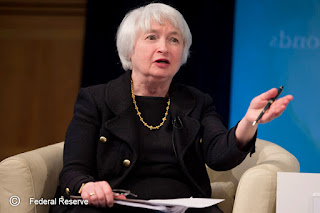 Yellen fielded questions on the Fed's independence within the federal government on Wednesday, days after a report surfaced last week that Fed governor Lael Brainard donated $750 to the campaign of Democratic frontrunner Hillary Clinton. Brainard, who served as Deputy National Economic Advisor under former President Bill Clinton in the mid-1990s, made the donations in three contributions from November through January, according to Federal Election Commission (FEC) records.
"We are a nonpartisan independent institution devoted to pursuing our congressionally mandated objectives, and I have never seen political views in any way influence the policy judgments that are made inside the Federal Reserve," Ms. Yellen said. "I want to say that emphatically."
Governors from the Federal Reserve are subject to the Hatch Act, a federal law passed in 1939, which prohibits high-level officials from engaging in partisan political activity. The law, which was named for Sen. Carl Hatch (D, New Mexico), was most recently amended in 2012.
"I would say, within that, it’s up to each individual to decide what is appropriate in their point of view," Yellen added. "The Federal Reserve is not a partisan political organization."
Brainard has close family ties with both Bill and Hillary Clinton. For a five-year period beginning in 2009, Brainard's husband, Kurt Campbell, worked in the State Department as the Assistant Secretary of State for East Asian and Pacific Affairs, while advancing a comprehensive U.S. strategy that took him to every corner of the Asia-Pacific region. In 2013, Hillary Clinton awarded him with the Secretary of State's Distinguished Service Award – the nation's highest diplomatic award.
News source: investing.com

"We are a nonpartisan independent institution devoted to pursuing our congressionally mandated objectives, and I have never seen political views in any way influence the policy judgments that are made inside the Federal Reserve," Ms. Yellen said. "I want to say that emphatically."
Governors from the Federal Reserve are subject to the Hatch Act, a federal law passed in 1939, which prohibits high-level officials from engaging in partisan political activity. The law, which was named for Sen. Carl Hatch (D, New Mexico), was most recently amended in 2012.
"I would say, within that, it’s up to each individual to decide what is appropriate in their point of view," Yellen added. "The Federal Reserve is not a partisan political organization."
Brainard has close family ties with both Bill and Hillary Clinton. For a five-year period beginning in 2009, Brainard's husband, Kurt Campbell, worked in the State Department as the Assistant Secretary of State for East Asian and Pacific Affairs, while advancing a comprehensive U.S. strategy that took him to every corner of the Asia-Pacific region. In 2013, Hillary Clinton awarded him with the Secretary of State's Distinguished Service Award – the nation's highest diplomatic award.
News source: investing.com
What's Fibonacci Forex Trading?
Fibonacci forex trading is the basis of many forex trading systems used by a great number of professional forex brokers around the globe, and many billions of dollars are profitable traded every year based on these trading techniques.

Fibonacci was an Italian mathematician and he is best remembered by his world famous Fibonacci sequence, the definition of this sequence is that it's formed by a series of numbers where each number is the sum of the two preceding numbers; 1, 1, 2, 3, 5, 8, 13 ...But in the case of currency trading what is more important for the forex trader is the Fibonacci ratios derived from this sequence of numbers, i.e. .236, .50, .382, .618, etc.
These ratios are mathematical proportions prevalent in many places and structures in nature, as well as in many man made creations.
Forex trading can greatly benefit form this mathematical proportions due to the fact that the oscillations observed in forex charts, where prices are visibly changing in an oscillatory pattern, follow Fibonacci ratios very closely as indicators of resistance and support levels; maybe not to the last cent, but so close as to be really amazing.
Fibonacci price points, or levels, for any forex currency pair can be calculated in advance so that the trader will know when to enter or exit the market if the prediction given by the Fibonacci forex day trading system he uses fulfills its predictions.
Many people tries to make this analysis overly complicated scaring away many new forex traders that are just beginning to understand how the forex market works and how to make a profit in it. But this is not how it has to be.
I can't say it's a simple concept but it is quite understandable for any trader once he or she has grasped the basics and has had some practice trading using Fibonacci levels along with other secondary indicators that will help to improve the accuracy of the entry and exit point for every particular trade.
Free chapters of a forex day trading system can be downloaded at http://www.1-forex.com in case you are interested in learning more about Fibonacci forex trading.
By: Adrian Pablo

Fibonacci was an Italian mathematician and he is best remembered by his world famous Fibonacci sequence, the definition of this sequence is that it's formed by a series of numbers where each number is the sum of the two preceding numbers; 1, 1, 2, 3, 5, 8, 13 ...But in the case of currency trading what is more important for the forex trader is the Fibonacci ratios derived from this sequence of numbers, i.e. .236, .50, .382, .618, etc.
These ratios are mathematical proportions prevalent in many places and structures in nature, as well as in many man made creations.
Forex trading can greatly benefit form this mathematical proportions due to the fact that the oscillations observed in forex charts, where prices are visibly changing in an oscillatory pattern, follow Fibonacci ratios very closely as indicators of resistance and support levels; maybe not to the last cent, but so close as to be really amazing.
Fibonacci price points, or levels, for any forex currency pair can be calculated in advance so that the trader will know when to enter or exit the market if the prediction given by the Fibonacci forex day trading system he uses fulfills its predictions.
Many people tries to make this analysis overly complicated scaring away many new forex traders that are just beginning to understand how the forex market works and how to make a profit in it. But this is not how it has to be.
I can't say it's a simple concept but it is quite understandable for any trader once he or she has grasped the basics and has had some practice trading using Fibonacci levels along with other secondary indicators that will help to improve the accuracy of the entry and exit point for every particular trade.
Free chapters of a forex day trading system can be downloaded at http://www.1-forex.com in case you are interested in learning more about Fibonacci forex trading.
By: Adrian Pablo
Aussie gains on drop in unemployment, yen weaker on trade
The Aussie gained in Asia on Thursday as overall jobs data buoyed sentiment and the yen weaker on trade with investors noting caution by the Fed in the latest monetary policy review.
 AUD/USD gained as the unemployment rate fell, up 0.41% to 0.7582. USD/JPY traded at 112.85, up 0.26%.
In Australia jobs data showed a gain of 3,000 jobs in February, less than the 10,000 seen, under a participation rate of 64.9%, less than the 65.2%, and an unemployment rate of 5.8%, below the 6.0% expected.
In Japan, the adjusted trade balance for February came in at a surplus of $170 billion, narrower than the Y240 billion seen.
Exports fell 4.0% year-on-year, more than the 3.1% drop seen, and imports slumped 14.2%, a bit less than the 15.2% expected.
Earlier, New Zealand said fourth quarter GDP rose 0.9% quarter-on-quarter, beating the 0.6% gain expected.
The Federal Reserve lowered expectations for rate hikes this year bringing their forecast more in line with market expectations as they held off on raising their policy rate at the latest Federal Open Market meeting on Wednesday.
As expected the Federal Open Market Committee left rates unchanged at the 0.25% to 0.50% range at the end of their two-day meeting, but made a few changes to the post-meeting statement and downgrades to their accompanying economic forecasts.
The U.S. dollar index, which measures the greenback’s strength against a trade-weighted basket of six major currencies, was last quoted at 95.80, up 0.10%. Overnight, ahead of the meeting, the dollar pushed higher against the other major currencies on Wednesday, after the release of mixed U.S. data.
The U.S. Commerce Department said that housing starts rose 5.2% in February to hit 1.178 million units from January’s total of 1.120 million units. Analysts had expected a rise 4.6% to 1.150 million. Meanwhile, the number of building permits issued declined 3.1% to 1.202 million units last month from January’s 1.204 million. Economists had forecast a drop of 0.1% to 1.167 million units in February.
A separate report showed that the U.S. consumer price index fell by 0.2% in February, matching expectations. Year-over-year, consumer prices were 1.0% higher.
Core CPI, which excludes food and energy, increased at annualized rate of 2.3% last month, compared to expectations for a 2.2% gain.Data also showed that U.S. industrial production decreased by 0.5% last month, worse than expectations for a decline of 0.2%.
News source: Investing.com

In Australia jobs data showed a gain of 3,000 jobs in February, less than the 10,000 seen, under a participation rate of 64.9%, less than the 65.2%, and an unemployment rate of 5.8%, below the 6.0% expected.
In Japan, the adjusted trade balance for February came in at a surplus of $170 billion, narrower than the Y240 billion seen.
Exports fell 4.0% year-on-year, more than the 3.1% drop seen, and imports slumped 14.2%, a bit less than the 15.2% expected.
Earlier, New Zealand said fourth quarter GDP rose 0.9% quarter-on-quarter, beating the 0.6% gain expected.
The Federal Reserve lowered expectations for rate hikes this year bringing their forecast more in line with market expectations as they held off on raising their policy rate at the latest Federal Open Market meeting on Wednesday.
As expected the Federal Open Market Committee left rates unchanged at the 0.25% to 0.50% range at the end of their two-day meeting, but made a few changes to the post-meeting statement and downgrades to their accompanying economic forecasts.
The U.S. dollar index, which measures the greenback’s strength against a trade-weighted basket of six major currencies, was last quoted at 95.80, up 0.10%. Overnight, ahead of the meeting, the dollar pushed higher against the other major currencies on Wednesday, after the release of mixed U.S. data.
The U.S. Commerce Department said that housing starts rose 5.2% in February to hit 1.178 million units from January’s total of 1.120 million units. Analysts had expected a rise 4.6% to 1.150 million. Meanwhile, the number of building permits issued declined 3.1% to 1.202 million units last month from January’s 1.204 million. Economists had forecast a drop of 0.1% to 1.167 million units in February.
A separate report showed that the U.S. consumer price index fell by 0.2% in February, matching expectations. Year-over-year, consumer prices were 1.0% higher.
Core CPI, which excludes food and energy, increased at annualized rate of 2.3% last month, compared to expectations for a 2.2% gain.Data also showed that U.S. industrial production decreased by 0.5% last month, worse than expectations for a decline of 0.2%.
News source: Investing.com
Sunday, 13 March 2016
How To Choose A FOREX Broker
Most investors who trade Forex stocks use a broker. A broker is an individual or a company, who buys and sells stocks according to the investor's wishes. Brokers earn money by collecting commissions or fees for their services.
You should check that a broker is registered as a Futures Commission Merchant (FCM) with the Commodity Futures Trading Commission (CFTC) as protection against fraud or abusive trade practices.
A Forex broker also needs to be associated with a financial institution, such as a bank in order to provide funds for margin trading.
Picking the right Forex broker for you will take some work on your part. There are brokers who charge a flat fee and some that charge commission. It may be a good idea to talk with friends and business associates about their brokers.
You may get some good leads, and you're certain to hear who to stay away from. There is nothing like word of mouth advertising. If you are thinking of investing online, you could choose several online brokers and contact their help desks. Seeing how quickly they respond to your questions could be key in how they will respond to their customers needs. If you don't get a speedy reply and a satisfactory answer to your question you certainly wouldn't want to trust them with your business.
Just be aware that as in other types of businesses, pre sales service might be better than after sales service. Before you choose an online broker get a copy of their online demo account. What features are included? Is the software reliable? Does it offer automatic trading? Are there extra software features that cost more?
Before setting up an account with a Forex broker you will need to do further investigation. How quickly will these brokers execute your buy/sell orders? What is their policy on slippage? What are the transaction fees? What is the spread, fixed or variable? What are the margin requirements and how are they calculated? Does the margin change with currency traded? Is it the same for mini accounts and standard accounts? Don't forget to ask about minimum account balances and interest payments on account balances. Make sure that your funds will be insured.
By: Mark Freeman

You should check that a broker is registered as a Futures Commission Merchant (FCM) with the Commodity Futures Trading Commission (CFTC) as protection against fraud or abusive trade practices.
A Forex broker also needs to be associated with a financial institution, such as a bank in order to provide funds for margin trading.
Picking the right Forex broker for you will take some work on your part. There are brokers who charge a flat fee and some that charge commission. It may be a good idea to talk with friends and business associates about their brokers.
You may get some good leads, and you're certain to hear who to stay away from. There is nothing like word of mouth advertising. If you are thinking of investing online, you could choose several online brokers and contact their help desks. Seeing how quickly they respond to your questions could be key in how they will respond to their customers needs. If you don't get a speedy reply and a satisfactory answer to your question you certainly wouldn't want to trust them with your business.
Just be aware that as in other types of businesses, pre sales service might be better than after sales service. Before you choose an online broker get a copy of their online demo account. What features are included? Is the software reliable? Does it offer automatic trading? Are there extra software features that cost more?
Before setting up an account with a Forex broker you will need to do further investigation. How quickly will these brokers execute your buy/sell orders? What is their policy on slippage? What are the transaction fees? What is the spread, fixed or variable? What are the margin requirements and how are they calculated? Does the margin change with currency traded? Is it the same for mini accounts and standard accounts? Don't forget to ask about minimum account balances and interest payments on account balances. Make sure that your funds will be insured.
By: Mark Freeman
Saturday, 12 March 2016
China January-February activity data weak, policy easing expected
China's activity data remained weak in the first two months of 2016, with factory output growth hitting the weakest since the global financial crisis, keeping pressure on policymakers to do more to avert a sharper showdown in the world's second-largest economy.

Factory output grew 5.4 percent in January and February from a year earlier, data released by the National Bureau of Statistics (NBS) showed, slowing from a 5.9 percent rise in December to the weakest since November 2008.
Economists polled by Reuters had expected factory output to grow 5.6 percent in the first two months from a year earlier.
Retail sales, a gauge of domestic consumption, rose 10.2 percent in the first two months - the weakest since May 2015, versus expectations of a 10.8 percent rise.
However, fixed-asset investment, a crucial driver China's economy, rose 10.2 percent in the first two months from a year earlier, beating expectations of 9.5 percent.
The government reports combined January and February growth figures for the factory output, investment and retail sales, to smooth out seasonal distortions caused by the long Lunar New Year holiday, when most companies shut down.
The government has set a growth target of 6.5 percent to 7 percent for this year. A spate of soft data points to further weakness at the start of the year as Beijing struggles to cushion the slowdown.
Top leaders have already pledged "supply-side structural reforms" to tackle excess factory capacity and are also expected to step up policy support to help avert an economic hard landing.
China's economy expanded an annual 6.9 percent in 2015, its slowest pace in 25 years.
News source: BEIJING (Reuters)
Friday, 11 March 2016
Dollar turns broadly lower after Draghi remarks
The dollar turned broadly lower against the other major currencies on Thursday, erasing a more than 1% rally after European Central Bank President Mario Draghi said interest rates aren’t likely to be cut again.
EUR/USD rallied 1.43% to 1.1155.

The euro initially weakened after the ECB cut interest rates across the euro zone to new record lows and boosted its quantitative easing program.
The ECB wrong footed markets by cutting its benchmark interest rate to a record-low of zero from 0.05%. Market watchers had been expecting no change.
The central bank also cut the deposit facility rate deeper into negative territory, to minus 0.4% and cut the marginal lending rate cut to 0.25% from 0.30%.
In addition, the ECB boosted its quantitative easing program by €20 billion per month to €80 billion, starting in April.
The bank also said investment grade euro-denominated bonds would become eligible for purchases under its asset purchase program.
But the euro rebounded after Draghi said the ECB did not anticipate that it will be necessary to reduce interest rates further, but added that this could change.
In the U.S., the Department of Labor said the number of individuals filing for initial jobless benefits in the week ending March 5 decreased by 18,000 to 259,000 from the previous week’s total of 277,000.
Analysts expected jobless claims to fall by 2,000 to 275,000 last week.
USD/JPY eased up 0.09% to 114.43.
The dollar turned lower against the pound and the Swiss franc, with GBP/USD up 0.51% at 1.4288 and with USD/CHF tumbling 1.13% to 0.9860.
Earlier Thursday, British Prime Minister David Cameron warned that a U.K. exit from the European Union would put pressure on sterling.
Meanwhile, the Australian dollar was lower, with AUD/USD down 0.44% at 0.7452, while NZD/USD added 0.17% to 0.6665.
Earlier Thursday, the Reserve Bank of New Zealand unexpectedly lowered its benchmark interest rate to 2.25% from 2.50% and signaled the possibility for further rate cuts to come.
USD/CAD rose 0.25% to 1.3285.
The U.S. dollar index, which measures the greenback’s strength against a trade-weighted basket of six major currencies, was down 0.84% at 96.38, the lowest since February 15, after hitting one-and-a-half week highs of 98.42 earlier in the session.
News source: investing.com
EUR/USD rallied 1.43% to 1.1155.

The euro initially weakened after the ECB cut interest rates across the euro zone to new record lows and boosted its quantitative easing program.
The ECB wrong footed markets by cutting its benchmark interest rate to a record-low of zero from 0.05%. Market watchers had been expecting no change.
The central bank also cut the deposit facility rate deeper into negative territory, to minus 0.4% and cut the marginal lending rate cut to 0.25% from 0.30%.
In addition, the ECB boosted its quantitative easing program by €20 billion per month to €80 billion, starting in April.
The bank also said investment grade euro-denominated bonds would become eligible for purchases under its asset purchase program.
But the euro rebounded after Draghi said the ECB did not anticipate that it will be necessary to reduce interest rates further, but added that this could change.
In the U.S., the Department of Labor said the number of individuals filing for initial jobless benefits in the week ending March 5 decreased by 18,000 to 259,000 from the previous week’s total of 277,000.
Analysts expected jobless claims to fall by 2,000 to 275,000 last week.
USD/JPY eased up 0.09% to 114.43.
The dollar turned lower against the pound and the Swiss franc, with GBP/USD up 0.51% at 1.4288 and with USD/CHF tumbling 1.13% to 0.9860.
Earlier Thursday, British Prime Minister David Cameron warned that a U.K. exit from the European Union would put pressure on sterling.
Meanwhile, the Australian dollar was lower, with AUD/USD down 0.44% at 0.7452, while NZD/USD added 0.17% to 0.6665.
Earlier Thursday, the Reserve Bank of New Zealand unexpectedly lowered its benchmark interest rate to 2.25% from 2.50% and signaled the possibility for further rate cuts to come.
USD/CAD rose 0.25% to 1.3285.
The U.S. dollar index, which measures the greenback’s strength against a trade-weighted basket of six major currencies, was down 0.84% at 96.38, the lowest since February 15, after hitting one-and-a-half week highs of 98.42 earlier in the session.
News source: investing.com
History of Forex
At the end of the World War II, the whole world was experiencing so much chaos that the major Western governments felt the need to create a system to stabilize the global economy.
Known as the “Bretton Woods System,” the agreement set the exchange rate of all currencies against gold.
This stabilized exchange rates for a while, but as the major economies of the world started to change and grow at different speeds, the rules of the system soon became obsolete and limiting.

soon enough, come 1971, the Bretton Woods Agreement was abolished and replaced by a different currency valuation system. With the United States in the pilot’s seat, the currency market evolved to a free-floating one, where exchange rates were determined by supply and demand.
At first, it was difficult to determine fair exchange rates, but advances in technology and communication eventually made things easier.
Once the 1990s came along, thanks to computer nerds and the booming growth of the internet (cheers to you Mr. Al Gore), banks began creating their own trading platforms.
These platforms were designed to stream live quotes to their clients so that they could instantly execute trades themselves.
Meanwhile, some smart business-minded marketing machines introduced internet-based trading platforms for individual traders.
Known as “retail forex brokers”, these entities made it easy for individuals to trade by allowing smaller trade sizes. Unlike in the interbank market where the standard trade size is one million units, retail brokers allowed individuals to trade as little as 1000 units!
With hardly any barriers to entry, anybody could just contact a broker, open up an account, deposit some money, and trade forex from the comfort of their own home. Brokers basically come in two forms:
Like in all business transactions, there is a catch. In this case, it comes in the form of the bid/ask spread.
For instance, if the bank’s buying price (bid) for EUR/USD is 1.2000, and their selling price (ask) is 1.2002, then the bid/ask spread is 0.0002. Although seemingly small, when you’re talking about millions of these forex transactions every day, it does add up to create a hefty profit for the market makers!
You could say that market makers are the fundamental building blocks of the foreign exchange market. Retail market makers basically provide liquidity by “repackaging” large contract sizes from
wholesalers into bite size pieces. Without them, it will be very hard for the average Joe to trade forex.
Due to the ability of traders to set their own prices, ECN brokers typically charge a VERY small commission for the trades you take. The combination of tight spreads and small commission usually make transaction costs cheaper on ECN brokers.
Of course, it’s not enough to know the big guys in the biz. As Big Pippin once said, “Trading requires timing.” Do you know WHEN you should trade?
Read more: http://www.babypips.com/school/preschool/who-trades-forex/know-your-history.html#ixzz42YRjJb10
Known as the “Bretton Woods System,” the agreement set the exchange rate of all currencies against gold.
This stabilized exchange rates for a while, but as the major economies of the world started to change and grow at different speeds, the rules of the system soon became obsolete and limiting.

soon enough, come 1971, the Bretton Woods Agreement was abolished and replaced by a different currency valuation system. With the United States in the pilot’s seat, the currency market evolved to a free-floating one, where exchange rates were determined by supply and demand.
At first, it was difficult to determine fair exchange rates, but advances in technology and communication eventually made things easier.
Once the 1990s came along, thanks to computer nerds and the booming growth of the internet (cheers to you Mr. Al Gore), banks began creating their own trading platforms.
These platforms were designed to stream live quotes to their clients so that they could instantly execute trades themselves.
Meanwhile, some smart business-minded marketing machines introduced internet-based trading platforms for individual traders.
Known as “retail forex brokers”, these entities made it easy for individuals to trade by allowing smaller trade sizes. Unlike in the interbank market where the standard trade size is one million units, retail brokers allowed individuals to trade as little as 1000 units!
Retail Forex Brokers
In the past, only the big speculators and highly capitalized investment funds could trade currencies, but thanks to retail forex brokers and the Internet, this isn’t the case anymore.With hardly any barriers to entry, anybody could just contact a broker, open up an account, deposit some money, and trade forex from the comfort of their own home. Brokers basically come in two forms:
- Market makers, as their name suggests, “make” or set their own bid and ask prices themselves and
- Electronic Communications Networks (ECN), who use the best bid and ask prices available to them from different institutions on the interbank market.
Market Makers
Let’s say you wanted to go to France to eat some snails. In order for you to transact in the country, you need to get your hands on some euros first by going to a bank or the local foreign currency exchange office. For them to take the opposite side of your transaction, you have to agree to exchange your home currency for euros at the price they set.Like in all business transactions, there is a catch. In this case, it comes in the form of the bid/ask spread.
For instance, if the bank’s buying price (bid) for EUR/USD is 1.2000, and their selling price (ask) is 1.2002, then the bid/ask spread is 0.0002. Although seemingly small, when you’re talking about millions of these forex transactions every day, it does add up to create a hefty profit for the market makers!
You could say that market makers are the fundamental building blocks of the foreign exchange market. Retail market makers basically provide liquidity by “repackaging” large contract sizes from
wholesalers into bite size pieces. Without them, it will be very hard for the average Joe to trade forex.
Electronic Communications Network
Electronic Communication Network is the name given for trading platforms that automatically match customer’s buy and sell orders at stated prices. These stated prices are gathered from different market makers, banks, and even other traders who use the ECN. Whenever a certain sell or buy order is made, it is matched up to the best bid/ask price out there.Due to the ability of traders to set their own prices, ECN brokers typically charge a VERY small commission for the trades you take. The combination of tight spreads and small commission usually make transaction costs cheaper on ECN brokers.
Of course, it’s not enough to know the big guys in the biz. As Big Pippin once said, “Trading requires timing.” Do you know WHEN you should trade?
Read more: http://www.babypips.com/school/preschool/who-trades-forex/know-your-history.html#ixzz42YRjJb10
Monday, 7 March 2016
The week ahead-Forex
In the week ahead, investors will be focusing on Thursday’s European Central Bank meeting after the bank disappointed expectations with a smaller-than-expected stimulus move at its December meeting.
Central bank meetings in Canada and New Zealand will also be closely watched.
 Investors will also be zoning in on inflation and trade data from China amid concerns that the world’s number-to economy is heading for a hard landing.
On Monday, Germany is to release data on factory orders. The Swiss National Bank is to publish data on its foreign currency reserves and the Eurogroup of euro zone finance ministers are to hold talks in Brussels.
Later, Federal Reserve Governors Lael Brainard and Stanley Fischer are both due to speak at an event in Washington.
Last week, the dollar weakened against the other major currencies on Friday as a mixed U.S. jobs report for February dampened expectations that the Federal Reserve would raise interest rates again in the near term.
The Labor Department reported that the U.S. economy added 242,000 new jobs last month, easily outstripping forecasts for wage growth of 190,000.
The unemployment rate held steady at an eight-year low of 4.9%, in line with forecasts.
But average hourly earnings fell by 0.1% during February, reversing the 0.5% rise seen in January. The drop in average earnings lowered the year-on-year gain in earnings to 2.2% from 2.5% in January.
The weak wage numbers indicated that consumer inflation is likely to remain muted. Fed policymakers are watching inflation closely as they try to determine when to raise rates again.
Higher interest rates would boost the dollar by making it more attractive to yield-seeking investors.
Central bank meetings in Canada and New Zealand will also be closely watched.
 Investors will also be zoning in on inflation and trade data from China amid concerns that the world’s number-to economy is heading for a hard landing.
On Monday, Germany is to release data on factory orders. The Swiss National Bank is to publish data on its foreign currency reserves and the Eurogroup of euro zone finance ministers are to hold talks in Brussels.
Later, Federal Reserve Governors Lael Brainard and Stanley Fischer are both due to speak at an event in Washington.
Last week, the dollar weakened against the other major currencies on Friday as a mixed U.S. jobs report for February dampened expectations that the Federal Reserve would raise interest rates again in the near term.
The Labor Department reported that the U.S. economy added 242,000 new jobs last month, easily outstripping forecasts for wage growth of 190,000.
The unemployment rate held steady at an eight-year low of 4.9%, in line with forecasts.
But average hourly earnings fell by 0.1% during February, reversing the 0.5% rise seen in January. The drop in average earnings lowered the year-on-year gain in earnings to 2.2% from 2.5% in January.
The weak wage numbers indicated that consumer inflation is likely to remain muted. Fed policymakers are watching inflation closely as they try to determine when to raise rates again.
Higher interest rates would boost the dollar by making it more attractive to yield-seeking investors.
Sunday, 28 February 2016
How To Get Started In FOREX Trading
The foreign exchange market (Forex) offers many advantages to investors. But you need to know where to begin.
 This short guide will give you the Forex basics, so you can quickly start participating in this fast growing market. In the past, foreign exchange trading was limited to large players such as national banks and multi-national corporations. In the 1980's the rules were changed to allow smaller investors to participate using margin accounts. Margin accounts are the reason why Forex trading has become so popular.
With a 100:1 margin account, you can control $100,000 with a $1,000 investment.
A Learning Curve
Forex is not simple, though, so you'll need some knowledge to make wise investment decisions. Although it is relatively easy to start trading on the Forex, there are risks involved. Your first move as a beginner should be to find out as much as possible about the market before risking a dime.
Find A Broker
Forex traders usually require a broker to handle transactions. Most brokers are reputable and are associated with large financial institutions such as banks. A reputable broker will be registered as a Futures Commission Merchant (FCM) with the Commodity Futures Trading Commission (CFTC) as protection against fraud and abusive trade practices.
Open an Account
Opening a Forex account is as simple as filling out a form and providing the necessary identification. The form includes a margin agreement which states that the broker may interfere with any trade deemed to be too risky. This is to protect the interests of the broker, since most trades are done using the broker's money.
Once your account has been established, you can fund it and begin trading. Many brokers offer a variety of accounts to suit the needs of individual investors. Mini accounts allow you to get involved in Forex trading for as little as $250. Standard accounts may have a minimum deposit of $1000 to $2500, depending on the broker.
The amount of leverage (how much borrowed money you can use) varies with account type. High leverage accounts give you more money to trade for a given investment. Trades are commission-free, meaning that you can make many trades in one day without worrying about incurring high brokerage fees. Brokers make their money on the 'spread': the difference between bid and ask prices.
 This short guide will give you the Forex basics, so you can quickly start participating in this fast growing market. In the past, foreign exchange trading was limited to large players such as national banks and multi-national corporations. In the 1980's the rules were changed to allow smaller investors to participate using margin accounts. Margin accounts are the reason why Forex trading has become so popular.
 With a 100:1 margin account, you can control $100,000 with a $1,000 investment.
A Learning Curve
Forex is not simple, though, so you'll need some knowledge to make wise investment decisions. Although it is relatively easy to start trading on the Forex, there are risks involved. Your first move as a beginner should be to find out as much as possible about the market before risking a dime.
Find A Broker
Forex traders usually require a broker to handle transactions. Most brokers are reputable and are associated with large financial institutions such as banks. A reputable broker will be registered as a Futures Commission Merchant (FCM) with the Commodity Futures Trading Commission (CFTC) as protection against fraud and abusive trade practices.
Open an Account
Opening a Forex account is as simple as filling out a form and providing the necessary identification. The form includes a margin agreement which states that the broker may interfere with any trade deemed to be too risky. This is to protect the interests of the broker, since most trades are done using the broker's money.
Once your account has been established, you can fund it and begin trading. Many brokers offer a variety of accounts to suit the needs of individual investors. Mini accounts allow you to get involved in Forex trading for as little as $250. Standard accounts may have a minimum deposit of $1000 to $2500, depending on the broker.
The amount of leverage (how much borrowed money you can use) varies with account type. High leverage accounts give you more money to trade for a given investment. Trades are commission-free, meaning that you can make many trades in one day without worrying about incurring high brokerage fees. Brokers make their money on the 'spread': the difference between bid and ask prices.
Saturday, 27 February 2016
Your FOREX Trading Philosophy
"Easy money" is the allure that captivates many beginning Forex traders. Forex websites offer "risk-free" trading, "high returns", "low investment." These claims have a grain of truth in them, but the reality of Forex is a bit more complex.
Mistakes Of The Beginning Trader
 There are 2 common mistakes that many beginner traders make: trading without a strategy and letting emotions rule their decisions. After opening a Forex account it may be tempting to dive right in and start trading. Watching the movements of EUR/USD for example, you may feel that you are letting an opportunity pass you by if you don't enter the market immediately.
 You buy and watch the market move against you. You panic and sell, only to see the market recover. This kind of undisciplined approach to Forex is guaranteed to lose money. Forex traders must have a rational trading strategy and not make trading decisions in the heat of the moment.
Understanding Market Movements
To make rational trading decisions, the Forex trader must be well educated in market movements. He must be able to apply technical studies to charts and plot out entry and exit points. He must take advantage of the various types of orders to minimize his risk and maximize his profit. The first step in becoming a successful Forex trader is to understand the market and the forces behind it.
Who trades Forex and why? This will allow you to identify successful trading strategies and use them.
Accountability
There are 5 major groups of investors who participate in Forex: governments, banks, corporations, investment funds, and traders. Each group has its own objectives, but 1 thing all groups except traders have in common is external control. Every organization has rules and guidelines for trading currencies and can be held accountable for their trading decisions. Individual traders, on the other hand, are accountable only to themselves. Large organizations and educated traders approach the Forex with strategies, and if you hope to succeed as a Forex trader you must follow suit.
Money Management
Money management is an integral part of any trading strategy. Besides knowing which currencies to trade and how to recognize entry and exit signals, the successful trader has to manage his resources and integrate money management into his trading plan. There are various strategies for money management. Many rely on the calculation of core equity -- your starting balance minus the money used in open positions.
Core Equity And Limited Risk
When entering a position try to limit your risk to 1% to 3% of each trade. This means that if you are trading a standard Forex lot of $100,000 you should limit your risk to $1,000 to $3,000. You do this with a stop loss order 100 pips (1 pip = $10) above or below your entry position. As your core equity rises or falls, adjust the dollar amount of your risk.
With a starting balance of $10,000 and 1 open position, your core equity is $9000. If you wish to add a second open position, your core equity would fall to $8000 and you should limit your risk to $900. Risk in a third position should be limited to $800.
Greater Profit, Greater Risk You should also raise your risk level as your core equity rises. After $5,000 profit, your core equity is now $15,000. You could raise your risk to $1,500 per transaction. Alternatively, you could risk more from the profit than from the original starting balance. Some traders may risk up to 5% against their realized profits ($5,000 on a $100,000 lot) for greater profit potential. These are the kinds of strategic tactics that allow a beginner to get a foothold on profitable trading in Forex.
by Ron King
http://www.forex4u-now.com
Friday, 26 February 2016
Forex- Daily market updates Friday 26-02-2016
The dollar slipped lower against the euro and the yen on Friday, as investors continued to focus on the oil market and awaited the release of a string of U.S. economic reports due later in the day.
Separately, data on Friday showed that Tokyo’s consumer price index rose at an annual rate of 0.1% in February, compared to expectations for a 0.3% fall and after a 0.3% slip the previous month.
 Tokyo’s core CPI, which excludes fresh food, ticked down 0.1% this month, confounding expectations for a 0.2% fall and after a 0.1% decline in January.
The pound edged higher against the U.S. dollar on Friday, as sentiment on the greenback weakened ahead of a string of key U.S. economic reports and as concerns over a potential British exit from the European Union slightly eased.
In the euro zone, preliminary data showed that Germany’s CPI ticked up 0.4% in February, disappointing expectations for a 0.5% rise, after a 0.8% fall the previous month. Year-on-year, consumer prices were flat, compared to expectations for a 0.1% gain.
The dollar strengthened after preliminary data showed that U.S. gross domestic product grew 1.0% in the fourth quarter, compared to a previously reported 0.7% growth rate and expectations for a 0.4% rate.
A separate report showed that the U.S. goods trade deficit widened to $62.23 billion in January from $61.50 billion the previous month. Analysts had expected the goods trade deficit to narrow to $61.10 billion last month.
Data also showed that personal spending rose 0.5% in January, beating expectations for a 0.3% gain, after an increase of 0.1% in December.
In addition, the University of Michigan said its index of consumer sentiment rose to 91.7 in February from 90.7 the previous month, compared to expectations for an increase to 91.0.
Wednesday, 24 February 2016
EURUSD still on bullish stance.
US Dollar lower against the EUR after disappointed data
on Wednesday. EURUSD extended its recovery the
low from 1.0958, currently trading in 1.1024, after making the day high of
1.1046.
 The
U.S. Commerce Department said its New Home sales
dropped by 9.2% to 494,000 units last month, compared to expectations for a
decline of 4.4% to 520,000. US Markit services PMI fell to 49.8 in February, below the 53.5
expected. Meanwhile Crude oil inventories increased to 3.502M with the
expectation of 3.427M, underlined weakened US data.
The
U.S. Commerce Department said its New Home sales
dropped by 9.2% to 494,000 units last month, compared to expectations for a
decline of 4.4% to 520,000. US Markit services PMI fell to 49.8 in February, below the 53.5
expected. Meanwhile Crude oil inventories increased to 3.502M with the
expectation of 3.427M, underlined weakened US data.
Intraday support at 1.1000 where the
0.5 Fib retracement level on Hourly chart. In a Daily chart, during a downtrend, there is
a sell off after the candle starts. However, the candle closes
at or near its high. This signifies a weakening of the previous bearish
sentiment.
Bullish Hammer on EURUSD Daily chart
During a downtrend, there is a sell off after the candle starts. However, the candle closes at or near its high. This signifies a weakening of the previous bearish sentiment. The longer the lower shadow, the smaller the upper shadow, and the smaller the real body, the more significant the pattern is. White real body is more bullish than black body.
5 Things You’ll Learn Becoming a Successful Trader
Everyone knows the main reward of becoming a successful trader is money. But you will be rewarded with a lot more than just money if you become a successful trader, in fact, money is arguably the least valuable reward you will receive from achieving consistent success in the markets.
 The most valuable rewards of becoming a successful trader are the less tangible ones; self-discovery, self-improvement, true personal freedom and the real meaning behind virtues like patience and discipline.
 These are the things that will stick with you forever and that will improve and enhance your life as well as your relationships with other people, much more so than just money alone can…
1. What freedom actually feels like
In my opinion, the single biggest reward of being a successful trader is obtaining true personal freedom from jobs and the 9 to 5 rat race. Trading provides you with the tools and the ability to escape what I call modern-day ‘slavery’.It won’t be easy, it may not happen at all for you, but for me, I am extremely happy that by learning to trade, we can potentially earn our own freedom and escape the ‘matrix’ that is working constantly. Like it or not, in today’s society, the game is money, and you either play the game or you live a mediocre existence, at best. I was never the type of person to settle for that or to just accept I had to spend my whole life working for some company and give them the best years of my life in return for money, and far less than what I was actually worth.
So, for me, learning what true freedom feels like is the greatest reward of becoming a successful trader. All the money in the world doesn’t mean a thing if you don’t have any time to enjoy it, and trading the way that I do; swing trading with a focus on higher time frames and a ‘set and forget’ approach, allows me to have and enjoy the most valuable commodity; time.
2. How to evaluate the risk vs. reward of anything
If you make it to the point of being a consistently successful trader, you will also most certainly be a master of determining the risk to reward of any situation, service or product. The mindset of a successful trader is one that is constantly gauging risk and simultaneously figuring out what the potential reward might be, to ultimately make a decision. This of course is necessary for trading, but it’s also a great skill to be able to employ in just about any other situation in your life.For example, let’s say you need to get a different car. If you are thinking about the purchase from the mindset of a trader, you will carefully consider the risk vs. reward of buying a new car or buying a used car. Through that process, you will probably come to the conclusion that the risk of losing approximately 11% of a new car’s value as soon as you drive it off the lot, is probably not worth the reward of having the car when you can probably find the same car a little used and effectively get a 11% discount on it. Not everyone thinks like this about every situation, but successful trading will ingrain this type of thinking into you, and that’s almost always a very good thing.
Aussie lower after disappointed data
The Aussie fell on Wednesday in Asia after weaker than expected construction and wage data with investors showing concern over a downbeat global economy.
USD/JPY changed hands at 112.03, down 0.06%, while AUD/USD traded at 0.7199, down 0.08%.
USD/JPY changed hands at 112.03, down 0.06%, while AUD/USD traded at 0.7199, down 0.08%.
In Japan, the corporate services price index rose 0.2% compared to an expected gain of 0.3%.
In Australia, fourth quarter figures for construction work done showed a fdrop of 3.6%, compared to an expected drop of 2.0% quarter-on-quarter, and the wage price index rose 0.5%, compared to an expected gain of 0.6% quarter-on-quarter.
Tuesday, 23 February 2016
EURUSD likely find a key support level
US Dollar broadly supported on Friday the data showing that U.S. core inflation rose at the fastest rate in four years in January highlighting the expectations for further interest rates hikes by the Fed this year

EURUSD open at 1.1125 at the Asian session
and slide after the some disappointing data released on Monday, hit the low of 1.1000,
the key level of past two months. The pair likely find key support level after the
breaking resistance which was held several times over the past two months while
making Higher Low in the price and Lower Low in Stochastic which is further
confirming the bullish stance and also 0.618 fib retracement level at 1.1000.
By: Mohammad Thanish
Subscribe to:
Posts (Atom)
